

Multi-Energy Hub
Generation, storage, hydrogen and control in one platform
The Hexatra Multi-Energy Hub is a modular onsite platform. Renewable and grid input feed in; batteries and, where specified, hydrogen hold energy; control logic decides what is used locally, stored, or exchanged with the grid or a microgrid. AEHS can be added as an auxiliary input.
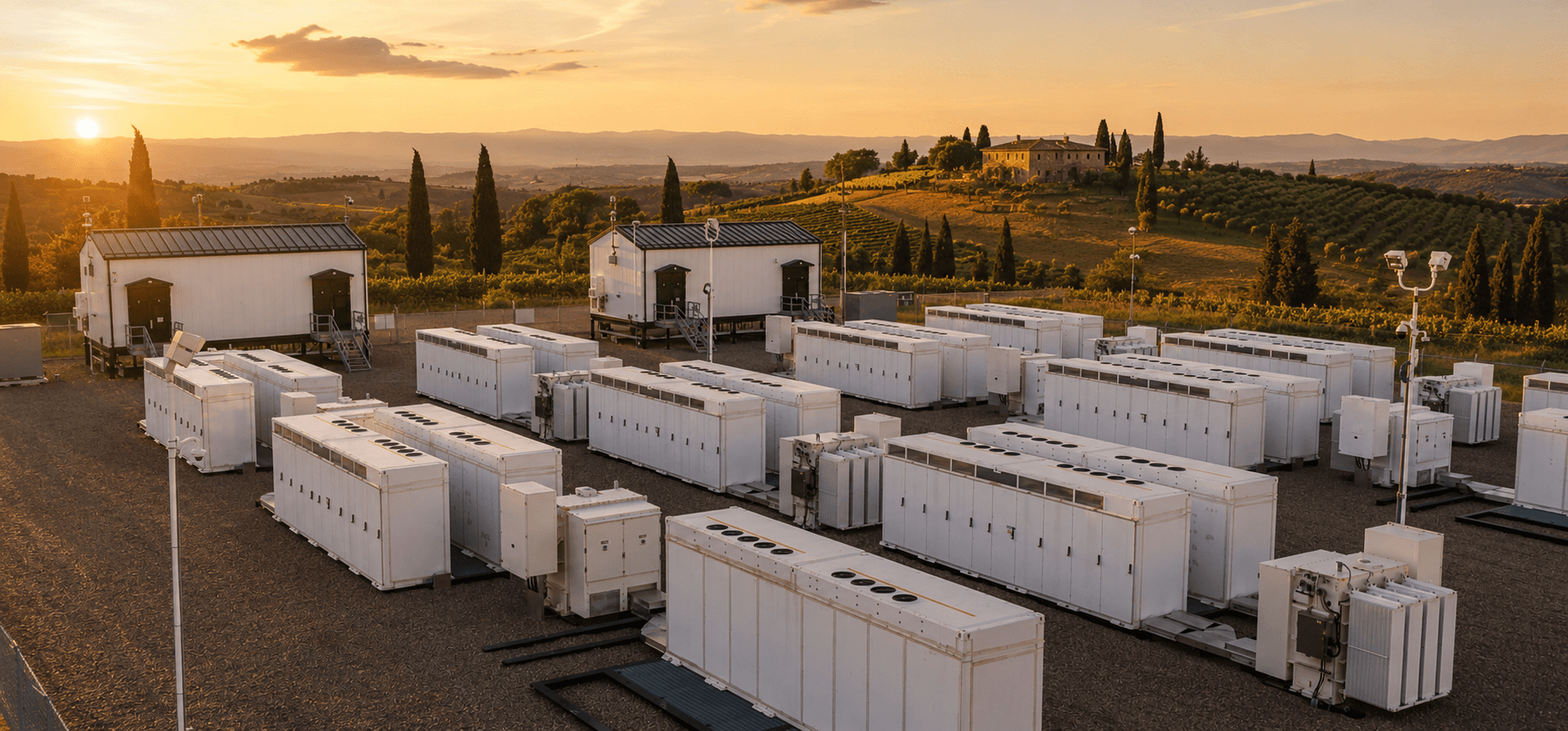
Product overview
How the hub sits on a site
Think of the hub as the coordinating layer. Generation and, where specified, AEHS feed in. Battery storage and hydrogen hold energy. Control logic decides what is used on site, stored, or exchanged with the grid or a microgrid.
Configuration depends on the site. The same architecture can support a grid-connected commercial yard, an islanded industrial process, or an off-grid location. Not every input or output is present in every installation.
System diagram
Multi-Energy Hub system overview
Connecting renewable power, hydrogen production, battery storage, atmospheric auxiliary power, control and grid or off-grid operation into one coordinated platform.
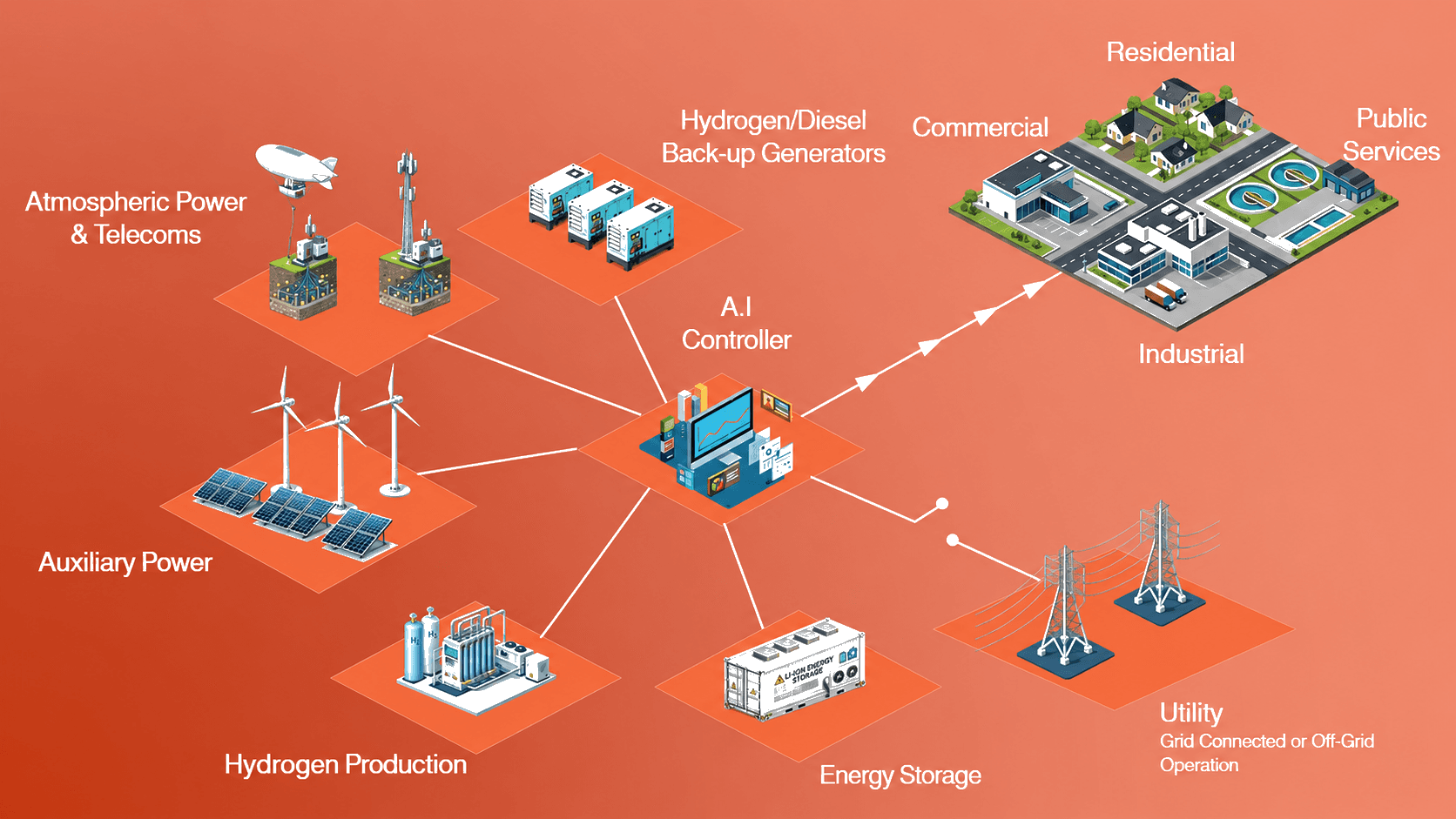
The Multi-Energy Hub combines renewable power, hydrogen production, storage, control and grid or off-grid energy dispatch.
How it works
Seven stages of a Multi-Energy Hub
Each stage is a function the hub can include. Specification decides which stages are present on a given site.
- 01
Renewable and grid input
Solar PV, wind, hydropower or imported grid electricity can feed the hub. Incoming power is converted, stored or dispatched according to how the site is configured.
- 02
Hydrogen production
Where specified, electrolyser pathways can convert surplus electricity into hydrogen for storage, backup generation or fuel uses. Hydrogen is an optional layer, not a requirement of every hub.
- 03
Battery storage
Battery systems hold energy for peak shaving, selected backup loads, load balancing and integration with onsite renewables. Storage duration depends on the specified battery plant.
- 04
AEHS auxiliary input
Atmospheric Energy Harvesting (AEHS) modules can be specified as a developing auxiliary input for monitoring, control and other low-power loads inside the hub architecture.
- 05
Control
Site control logic coordinates generation, storage, demand and dispatch so connected assets operate as one system rather than as separate controllers on the same plot.
- 06
Grid or microgrid interface
The hub can sit behind a grid connection, operate as a microgrid, or be configured for islanded or off-grid strategies. The interface is chosen for the site, not as a single default mode.
- 07
Modular deployment
Containerised formats are intended to support staged installation and later capacity changes as generation, storage or hydrogen requirements evolve.
Where it is used
Built to coordinate onsite energy, not to replace a site survey
One platform for several assets
Generation, storage, hydrogen and dispatch can be coordinated from a single hub architecture instead of isolated controllers.
Short- and longer-duration pathways
Batteries can cover shorter cycles. Hydrogen can be specified where longer-duration storage or fuel is part of the plan.
Grid-connected, islanded or off-grid
The same architecture can be configured around the site’s connection, continuity and operating strategy.
Room to add capacity later
Modular, containerised formats are intended to support staged growth in demand, storage or renewable input.
AEHS as an auxiliary feed
Where relevant, AEHS can be considered for monitoring, control and other low-power loads rather than as primary generation.
Fits existing onsite systems
A hub can sit with solar PV, wind, charging or storage already planned or installed through Energy Infrastructure work.
Multi-Energy Hub enquiry
Discuss a Multi-Energy Hub for your site
Speak with Hexatra about hub configuration and how it would sit with existing generation, storage or grid connection.